


PFAS in Deodorant: Safe Swaps for Pregnant Moms
TL;DR:
- Many conventional deodorants contain aluminum, synthetic fragrance, and potential PFAS that can be absorbed through the skin and may affect hormones during pregnancy and nursing.
- The underarm area is highly absorbent, making it one of the highest-priority personal care swaps for pregnant and breastfeeding moms.
- Clean, aluminum-free, fragrance-free deodorants are widely available at every budget level, including options under $15.
Key Takeaways
- Aluminum in conventional antiperspirants can accumulate in breast tissue and has been associated with estrogen-like responses, making it a common ingredient pregnant and nursing moms choose to avoid.
- PFAS (per- and polyfluoroalkyl substances, synthetic "forever chemicals") have been detected in some conventional personal care products, including deodorant, and may transfer through breast milk.
- Switching to a clean, unscented deodorant is one of the simplest, lowest-cost first steps in a lower-toxin personal care routine.
Why Your Deodorant Deserves a Second Look During Pregnancy
Pregnancy brings a long list of things to think about, and deodorant probably wasn't at the top of yours. But your skin is your largest organ, and what goes on it can be absorbed into the bloodstream. The underarm area is especially absorbent and sits directly adjacent to breast tissue, which is why what you apply there matters more during pregnancy and nursing than at almost any other time in your life.
This is not about fear. It's about making one practical, low-cost swap that can meaningfully reduce your daily chemical exposure.
What Are PFAS, and Why Do They Show Up in Deodorant?
PFAS stands for per- and polyfluoroalkyl substances, a family of thousands of synthetic chemicals used in manufacturing for their water- and grease-resistant properties. They're called "forever chemicals" because they don't break down in the body or in the environment.
Research highlighted by the Environmental Working Group has identified PFAS compounds in a range of cosmetics and personal care products sold in the US and Canada. Deodorant is among the categories flagged. PFAS can appear as a contaminant in raw ingredients or as an intentional additive for texture and application smoothness, and they're rarely disclosed on ingredient labels.
What this means for your family: You can't rely on reading the label alone. Choosing brands that independently test for PFAS is the most reliable way to avoid them.
During pregnancy and nursing, the concern is compounded. A systematic review published through NIH shows that PFAS can transfer from a mother's blood into breast milk, with the most consistent human evidence pointing to effects on infant immune response.
What About Aluminum in Antiperspirants?
The short answer: aluminum is the active blocking agent in most conventional antiperspirants, and its potential estrogenic activity is why many practitioners recommend a precautionary swap during pregnancy and nursing.
Most conventional deodorant products sold in drugstores are actually antiperspirants, meaning they use aluminum salts to physically block sweat glands. Aluminum can accumulate in breast tissue and has been studied for its potential estrogen-like activity, meaning it may behave similarly to estrogen in the body. This is sometimes described as an "estrogenic effect," and it's the reason many pregnant and nursing moms choose to eliminate it from their routine. Research published on PubMed has explored the relationship between aluminum-based compounds and breast tissue, and while more study is ongoing, many practitioners recommend a precautionary approach during pregnancy.
Your armpits are also one of the most absorbent areas on your body. The skin is thin, there are abundant lymph nodes nearby, and the area is often shaved, which can increase permeability. All of that adds up to a strong case for choosing the cleanest product possible.
SCRUNCHY MOM TIP: If you're trying to conceive or have recently found out you're pregnant, switching to an unscented, aluminum-free deodorant is one of the first personal care swaps worth making. Fragrance-free is especially important. Synthetic fragrance is a common carrier of phthalates, which are endocrine disruptors that can interfere with your hormones.
What Should You Actually Avoid?
When reading a deodorant label, look out for these ingredients:
- Aluminum (listed as aluminum chlorohydrate, aluminum zirconium, or similar): the active ingredient in antiperspirants
- Synthetic fragrance or "parfum": a catch-all term that can include hundreds of undisclosed chemicals, including phthalates
- Parabens (methylparaben, propylparaben, etc.): preservatives with estrogen-like activity
- Propylene glycol: a penetration enhancer that helps other chemicals absorb more deeply into skin
- Triclosan: an antimicrobial agent the FDA barred from consumer antiseptic wash products in 2016 after manufacturers failed to show it was safe for long-term daily use
"Endocrine disruptors" is a term you'll see throughout clean living content. It simply means a chemical that can interfere with your body's hormonal signaling system. During pregnancy and while breastfeeding, your hormonal environment is doing a tremendous amount of work. It's a reasonable time to reduce exposure where you can.
What Ingredients Should a Clean Deodorant Have?
A clean deodorant relies on odor-neutralizing and moisture-absorbing ingredients that work without blocking sweat glands, and a short, recognizable ingredient list is your best signal that a formula is genuinely clean.
Look for:
- Arrowroot powder or baking soda: absorbs moisture naturally (note: some people with sensitive skin react to baking soda. If you do, choose an arrowroot-only formula)
- Coconut oil: naturally antimicrobial
- Shea butter or cocoa butter: skin conditioning
- Magnesium hydroxide: a gentler odor neutralizer
- Organic essential oils (in non-pregnancy-safe formulas): for scent, though these should be avoided or used cautiously during the first trimester
During pregnancy, unscented is almost always the better call. Even organic essential oils can be sensitizing, and certain oils are contraindicated in pregnancy. When in doubt, go fragrance-free.
Good Brands to Buy
These brands have been vetted for clean ingredients and transparency. Always choose unscented versions during pregnancy and nursing unless a specific scented formula has been confirmed safe by your provider.
- Primally Pure Deodorant — uses organic coconut oil, arrowroot, beeswax, and essential oils. Their unscented formula is a top pick for the first trimester and beyond.
- Rowe Casa Organics Deodorant — has been independently tested and received a non-detect result for organic fluorine, meaning no PFAS were found. A strong pick if third-party PFAS testing is your top priority.
- Earth Mama Deodorant — specifically formulated with pregnancy and nursing in mind; free from aluminum, synthetic fragrance, and parabens.
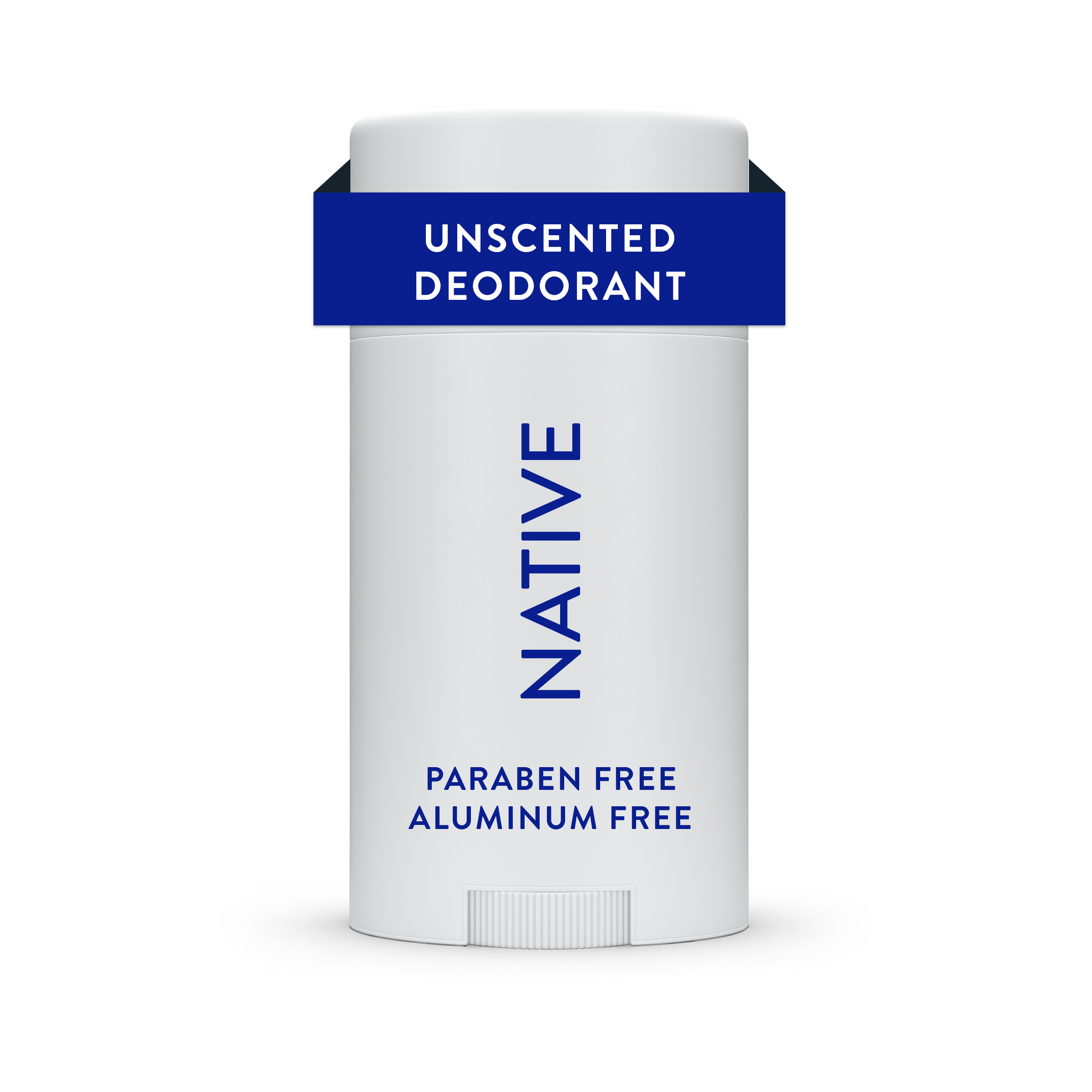
- Native (Unscented) Deodorant — aluminum-free, paraben-free, and phthalate-free. The unscented version is widely available and budget-friendly at around $12 to $14.
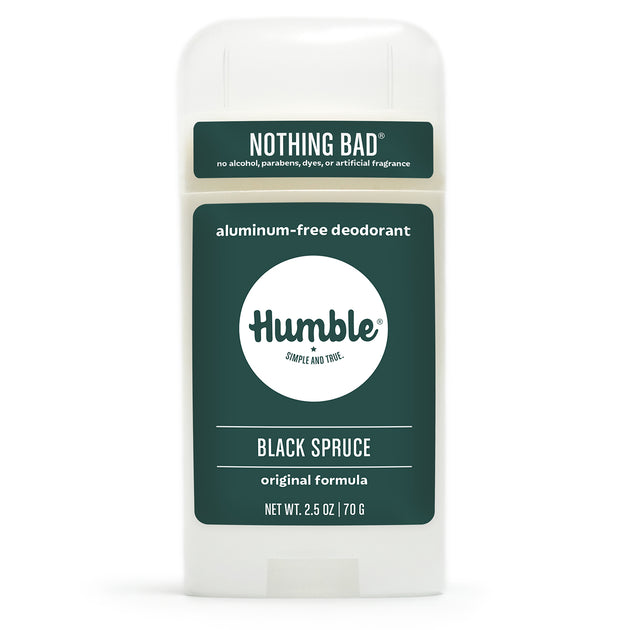
- Humble Deodorant — made with coconut oil, beeswax, and essential oils. A straightforward clean formula at an accessible price point.
- Honest Company (pregnancy line), Carina Organic, and Motherlove are also worth considering as plain-text alternatives where clean formulas have been carefully reviewed.
How to Make the Swap Without the Overwhelm
Start with what you have and swap when you run out
You don't need to throw everything away today. When your current deodorant runs out, replace it with one of the options above. That's a legitimate, budget-conscious approach.
Expect a transition period
Natural deodorant works differently from antiperspirant. Your body may go through a brief adjustment period (typically one to two weeks) as your sweat glands return to normal function after years of being blocked. This is normal. Applying a thin layer of Earth Mama or Primally Pure after showering on dry skin helps with effectiveness.
Budget tier options
- Tight budget: Native Unscented is available at most drugstores and Target for around $12. It's a solid entry point.
- Ideally: Primally Pure or Earth Mama for the most pregnancy-specific formulation.
- Middle ground: Humble Deodorant sits between the two in both price and clean ingredient quality.
If you're on a tight budget, start with Native Unscented and don't stress yet about upgrading to a premium brand. Getting aluminum and synthetic fragrance out of your routine is the priority.
Start here this week: Check your current deodorant label for aluminum, synthetic fragrance, and parabens. If you find any of those three, it's time for a swap at your next Target or pharmacy run.
Deodorant Swap Comparison at a Glance
| Brand | PFAS-Free Testing | Aluminum-Free | Fragrance-Free Option | Price Range |
|---|---|---|---|---|
| Rowe Casa Organics | Non-detect (tested) | Yes | Yes | $$$ |
| Primally Pure | Transparent ingredients | Yes | Yes (Unscented) | $$ |
| Earth Mama | Pregnancy-formulated | Yes | Yes | $$ |
| Native Unscented | No independent PFAS test published | Yes | Yes | $ |
| Humble | No independent PFAS test published | Yes | Select SKUs | $ |
FAQ
Q: Is it safe to use any deodorant while breastfeeding, or do I need to avoid it altogether?
A: You don't need to go without deodorant. The goal is to swap conventional antiperspirants containing aluminum, synthetic fragrance, and parabens for a clean, aluminum-free formula. Unscented options like Native Unscented or Earth Mama are appropriate for use during breastfeeding. Apply after a shower on fully dry skin for best results.
Q: Can PFAS from deodorant actually get into my breast milk?
A: PFAS are lipophilic, meaning they accumulate in fat, and breast milk is fat-rich. A systematic review supported by the NIH confirms that PFAS can transfer from maternal blood into breast milk. While deodorant is one of many potential sources, reducing your topical PFAS exposure is a practical step you can control. Experts still recommend breastfeeding, as its benefits significantly outweigh the risks from low-level PFAS exposure.
Q: What if natural deodorant doesn't work well enough for me?
A: Effectiveness varies by body chemistry, diet, and activity level. A few practical adjustments: apply to completely dry skin, reapply midday if needed during the first two weeks, and look for formulas with magnesium hydroxide if baking soda-based formulas cause irritation. Primally Pure offers a charcoal deodorant that many people find more effective for odor control without baking soda. If you're still struggling after four weeks, that's worth mentioning to your provider.
About the Author
Jenn Smith, RN BSN, is a registered nurse, mom, and co-founder of Scrunchy Living. She writes evidence-based guides to non-toxic living, pregnancy-safe products, and clean home practices for modern families.
Shop These Recommendations
| Product | Why It's Worth It | Amazon |
|---|---|---|
| Humble | A clean and effective natural deodorant. Humble is made with simple, high-quality… | Buy on Amazon |
| Native (Unscented) | A popular natural deodorant that is aluminum-free, paraben-free, and phthalate-free. The… | Buy on Amazon |
| Primally Pure | A natural skincare brand that uses high-quality, organic ingredients. Their products… | |
| Earth Mama | A brand offering clean, organic, and herbal-based products for pregnancy, postpartum, and… | Buy on Amazon |
From Scrunchy Living: The Non-Toxic Home Starter Kit ($75) replaces your household cleaners with one EWG Verified concentrate — quats-free, fragrance-free, and safe for pregnancy and babies. Includes a full year of ScrunchyAI, our ingredient-scanning tool for non-toxic families. Start your free 14-day trial →
You Might Also Like
- Best Non-Toxic Deodorant for Summer Moms 2026
- PFAS in Cookware: What Pregnant Moms Must Know
- Scrunchy All-Purpose Wipes — Non-toxic, baby-safe wipes for every surface in your home — the product we reach for every single day.
Medical Disclaimer: The content on Scrunchy Living is for educational purposes only and is not intended as medical advice. Always consult your healthcare provider before making changes to your personal care routine during pregnancy or while breastfeeding.