


Non-Toxic Stainless Steel Appliance Cleaning Guide
Stainless steel appliances attract grease, fingerprints, and hard water buildup, and most conventional cleaners tackle them with bleach, quats, or synthetic fragrance you don't want near a pregnant belly or a crawling baby. If you're looking for how to clean stainless steel appliances without toxic chemicals, the Scrunchy Non-Toxic Home Starter Kit gives you an EWG Verified, fragrance-free system that covers every stainless surface at one dilution. No harsh chemistry required.
Cleaning stainless steel safely comes down to two things: what's in your cleaner and how you apply it. According to the EWG, many popular stainless steel sprays contain ingredients flagged for respiratory irritation, hormone disruption, and developmental concerns, making the swap to a verified non-toxic formula worth the effort, especially during pregnancy and the newborn stage.
TL;DR:
1. Fill the labeled spray bottle with 1 part Scrunchy concentrate to 11 parts water. This ratio works on every stainless surface.
2. For everyday fingerprints and grease, spray directly and wipe with a microfiber cloth moving with the grain.
3. For stubborn grease or hard water film, spray again and let the solution dwell 10–15 minutes before wiping. Dwell time, not scrubbing, does the work.
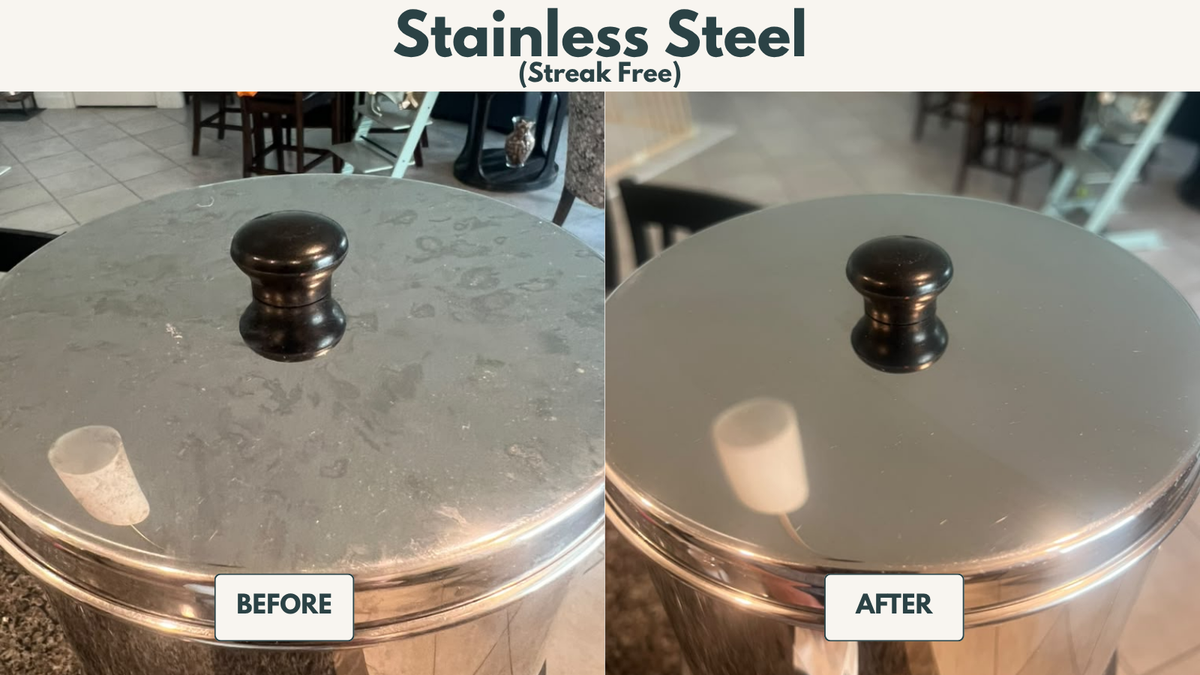
4. Finish with a dry buff to prevent new water spots from forming.
Key Takeaways
- Scrubbing stainless steel against the grain (or with abrasive pads) permanently scratches the surface and traps more bacteria and grime.
- Most "non-toxic" stainless steel cleaners still hide synthetic fragrance under loopholes that require no ingredient disclosure.
- A mildly acidic, EWG Verified all-purpose spray lifts fingerprints, grease, and hard water film from stainless surfaces without compromising the metal's protective oxide layer.
Why Do Conventional Stainless Steel Cleaners Cause Problems?
Most mainstream stainless steel sprays rely on ingredients that create new problems while solving the old one. Chlorine bleach degrades the thin chromium oxide layer that gives stainless steel its stain resistance. Peer-reviewed corrosion research confirms that chlorine compounds like sodium hypochlorite, the active ingredient in household bleach, break down this passive layer and trigger pitting, making the surface more prone to staining and corrosion with repeated use. Quats (quaternary ammonium compounds, disinfecting agents associated with respiratory sensitization and reproductive concerns) appear in many "antibacterial" stainless sprays, and synthetic fragrance hides behind a legal loophole that lets brands list dozens of undisclosed chemicals under a single word. Under current FDA regulations, fragrance formulas are considered trade secrets, meaning "naturally scented" products may still contain known endocrine disruptors that can interfere with your hormones.
For pregnant moms especially, ACOG recommends reducing exposure to toxic environmental agents before and during pregnancy, a category that includes many ingredients hiding in mainstream stainless steel sprays.
If you only do one thing from this section, do this: Flip your current stainless cleaner over and search each ingredient in EWG's Guide to Healthy Cleaning. One search is generally enough to confirm the swap is worth making.
How Do You Actually Clean Stainless Steel the Right Way?
The technique matters as much as the product, and the most common mistakes actively damage the surface.
Stainless steel has a visible grain (look closely and you'll see fine parallel lines). Scrubbing across that grain creates micro-scratches that catch grease and trap bacteria. Steel wool and abrasive pads do the same thing. And strongly acidic cleaners, including undiluted vinegar used repeatedly, can pit certain stainless finishes over time.
What works is a dwell-and-agitate-gently approach. The American Cleaning Institute consistently points out that dwell time, not scrubbing pressure, is what breaks the bond between organic stains and surfaces. A mildly acidic cleaner at pH 5.5–6.0 dissolves mineral deposits and fingerprint oils without attacking the metal. That pH range is also close to healthy skin's natural pH (around 4.7–5.75, per research in the International Journal of Cosmetic Science), making it safe on surfaces children regularly touch.
The method:
1. Spray your stainless surface with the Scrunchy concentrate (1:11 dilution).
2. Let it dwell 2–3 minutes for everyday grease and fingerprints.
3. Wipe with a microfiber cloth, moving with the grain.
4. Buff dry immediately to prevent water spots.
For hard water buildup or burnt-on grease, stick with the same spray and give it more time: apply generously, let it dwell 10–15 minutes to dissolve the buildup, then wipe with the grain and buff dry. A second pass beats hard scrubbing every time.
Wondering when to switch to a lighter, glass-strength mix? You don't need one. The same 1:11 dilution is already streak-free on stainless steel and glass, so there is no separate spray to mix, label, or store. If your tap water is very hard and you notice mineral spots after wiping, fill your bottle with distilled water instead of changing the ratio.
Start here this week: Identify the grain direction on your biggest stainless appliance and commit to always wiping with it. This single habit prevents the majority of scratching damage.
What Surface Gets What Treatment?
| Surface / Scenario | What to Use | What to Avoid | Key Tip |
|---|---|---|---|
| Stainless refrigerator (fingerprints, smudges) | Scrunchy concentrate spray, microfiber cloth | Steel wool, abrasive pads | Spray onto the cloth, not the door; wipe with the grain |
| Stainless stovetop (burnt-on grease) | Scrunchy concentrate spray, 10–15 min dwell | Undiluted bleach, harsh solvents | Let dwell time do the work, no hard scrubbing |
| Stainless sink (hard water buildup) | Scrunchy concentrate spray, dwell, then rinse | Undiluted vinegar (repeated use) | Buff dry to prevent new spots |
| Stainless dishwasher door (water spots) | Scrunchy concentrate spray, dry microfiber buff | Synthetic fragrance sprays | Finish with a dry buff every time |
| Stainless small appliances (toasters, kettles) | Scrunchy concentrate spray, soft cloth | Abrasive scrubbers | Unplug first; avoid pooling liquid near seams |
What's in the Scrunchy Non-Toxic Cleaning System?
The Scrunchy Non-Toxic Home Starter Kit is an EWG Verified system built around a single concentrate that handles every stainless steel cleaning scenario at one dilution, plus a companion powder for the rest of the house, with no label-reading required after the first fill.
The Scrunchy concentrate is the foundation, formulated at a single 1:11 dilution that handles every surface in the home, including stainless steel, glass, countertops, high chairs, and baby toys. No quats, no synthetic fragrance, no alcohol, no harsh solvents. Its natural preservative is Musa Sapientum (Banana) Trunk/Leaf Extract, an ingredient that meets EWG Verified standards without synthetic alternatives. Made in America.
The companion Brightening Powder contains just three EWG A-rated ingredients and no bleach, ammonia, dyes, or synthetic fragrance. It's the product to reach for on laundry whitening, grout lines, and tile. For stainless steel itself you won't need it: the all-purpose spray handles every scenario in the table above.
One kit covers the stainless steel in your kitchen and the rest of the house with it. One dilution, no guesswork on ingredients.
Ready to clean every stainless surface in your kitchen without toxic chemicals? Get the Scrunchy Non-Toxic Home Starter Kit →

Scrunchy Non-Toxic Home Starter Kit
$75
- ✓ EWG Verified Concentrate + Brightening Powder + 2 labeled bottles
- ✓ Replaces most spray bottles in the house with one safe formula
- ✓ 1 year of ScrunchyAI ingredient scanner included ($59 value)
FAQ
Q: How do I remove stubborn hard water buildup or burnt-on grease from a stainless steel appliance?
Use the same 1:11 all-purpose spray and let dwell time do the heavy lifting. Spray the area generously, wait 10–15 minutes so the solution can dissolve the buildup, then wipe with a soft microfiber cloth moving with the grain and buff dry. If residue remains, repeat with a second pass instead of scrubbing harder, since abrasive pressure scratches the finish. For hard water spots that keep returning, fill the spray bottle with distilled water and always finish with a dry buff. This dwell-and-wipe method protects the chromium oxide layer that keeps stainless steel stain-resistant over time.
Q: What does EWG Verified actually mean, and does it matter more during pregnancy?
EWG Verified is a third-party product-level certification from the Environmental Working Group, meaning an independent organization evaluated every ingredient in the finished formula, not just individual components in isolation. For pregnant moms, this matters because the certification screens out ingredients associated with reproductive toxicity, developmental concerns, and hormone disruption. The EWG flags these categories as especially critical for vulnerable populations. It sets a higher bar than a brand's own "clean" or "non-toxic" claim, which has no required third-party verification. Pregnancy is also when fragrance sensitivity is often heightened, making a certified fragrance-free formula worth seeking out specifically. The Scrunchy concentrate holds this certification at the product level.
Q: Is Brightening Powder safe to use on all fabrics and surfaces, or are there things to avoid?
Brightening Powder works well on most cotton, linen, synthetic, and blended fabrics, and on hard surfaces like grout and tile. Don't use it on wool, silk, leather, or dry-clean-only fabrics, as the active ingredients can damage delicate fibers. You also don't need it on stainless steel: the all-purpose spray alone handles fingerprints, grease, and hard water film on appliances. On specialty stainless finishes like brushed black or fingerprint-resistant coatings, do a quick spot test with the spray in an inconspicuous area first. Rinse any surface that will contact food thoroughly after cleaning. Store Brightening Powder in a cool, dry location away from moisture to preserve its effectiveness.
About the Author
Jenn Smith, RN BSN, is a registered nurse, mom, and co-founder of Scrunchy Living. She writes evidence-based guides to non-toxic living, pregnancy-safe products, and clean home practices for modern families.
You Might Also Like
Disclosure: Scrunchy Living is the brand behind the Scrunchy Non-Toxic Home Starter Kit. This article contains promotional content.