


Heavy Metals in Baby Food: What Each State Requires 2026
Key Takeaways
- As of January 2026, only four states (California, Maryland, Virginia, and Illinois) legally require baby food manufacturers to test for heavy metals and disclose results. The federal government still has no such requirement.
- Arsenic, cadmium, lead, and mercury enter baby food through soil absorption into plants, and independent testing has found heavy metal contamination in up to 95% of tested baby foods.
- You can reduce your baby's exposure right now by making fresh food at home, storing it in glass or stainless steel, and checking state-mandated QR code disclosures when buying packaged products.
TL;DR:
- No federal law requires baby food companies to test for heavy metals. Four states now do, but 46 don't.
- Heavy metals accumulate in the body over time and are linked to neurodevelopmental harm in infants and young children.
- Making baby food at home with low-risk ingredients and safe cookware is the most reliable way to reduce exposure right now.
Why This Matters to Your Baby Right Now
If you've been following the baby food safety conversation, you already know it hasn't been a reassuring one. A2LA reports that independent testing has found heavy metal contamination in up to 95% of tested commercial baby foods, and as of January 2026, there's still no federal law requiring manufacturers to test their products or tell you what's in them.
That gap falls on parents. And it's a lot to carry.
What Heavy Metals Are Actually Doing in Baby Food
How Do Heavy Metals Get Into Baby Food in the First Place?
Arsenic, cadmium, lead, and mercury are present in soil, both naturally and as a result of agricultural and industrial history. Plants absorb them through their roots, which means the contamination enters the food supply at the source, before manufacturing ever begins. West Virginia STPI
Rice-based products tend to concentrate inorganic arsenic. Root vegetables like sweet potatoes can absorb cadmium and lead from the soil. Leafy greens grown in certain regions carry elevated levels as well.
What this means for your family: The contamination happens in the ground, not the factory. Variety in your baby's diet lowers exposure to any single metal.
Why Are Heavy Metals Especially Dangerous for Infants?
Heavy metals accumulate in the body over time, and infants and young children are especially vulnerable because their brains and nervous systems are still developing. Even low-level ongoing exposure is associated with neurodevelopmental harm, including impacts on cognition, attention, and behavior. FDA
The metals of primary concern in baby food are:
- Lead — no safe level exists for children; linked to IQ reduction and behavioral issues
- Arsenic — particularly inorganic arsenic in rice; classified as a human carcinogen and associated with neurodevelopmental impacts
- Cadmium — accumulates in kidneys; linked to developmental disruption
- Mercury — a known neurotoxin; affects brain and nervous system development
What this means for your family: These four metals are the ones state laws are targeting. They're the same ones worth paying attention to on ingredient sourcing and product labels.
What Is Each State Actually Doing? (2026 Update)
California: The First State to Act
California was the first state to pass heavy metal testing and disclosure requirements for baby food manufacturers. Companies selling baby food in California must test for arsenic, lead, cadmium, and mercury and make results available to consumers. As of January 2026, California's law remains one of the more established frameworks at the state level.
Maryland: Rudy's Law and QR Code Disclosure
In 2024, Maryland enacted House Bill 97, known as Rudy's Law, making it the second state to require heavy metal testing and disclosure. The law requires manufacturers to begin testing and to display results via a scannable QR code on product packaging. It's a meaningful consumer transparency tool: you can scan a code at the store before purchasing.
SCRUNCHY MOM TIP: If you're shopping in Maryland, look for the QR code on the baby food package and scan it before you buy. It links directly to the manufacturer's heavy metal test results.
Virginia: Baby Food Protection Act (Effective January 1, 2026)
Virginia's Baby Food Protection Act (House Bill 1844) became effective January 1, 2026. Passed by the Virginia General Assembly in 2025, it requires manufacturers to test for lead, cadmium, arsenic, and mercury, then disclose results on their website and via a scannable code. VDACS
Illinois: Fourth State, Effective 2026
Virginia and Illinois became the third and fourth states to enact heavy metal testing and disclosure requirements, both taking effect in early 2026. Illinois follows the same framework: testing for the four primary metals (lead, cadmium, arsenic, mercury) with public disclosure requirements for manufacturers. Haynes Boone
What this means for your family: If you live in CA, MD, VA, or IL, manufacturers selling in your state are legally required to test and disclose. Use those QR codes and check brand websites.
What About the Other 46 States?
As of January 2026, there's no federal requirement for baby food manufacturers to test for heavy metals. Outside of the four states above, companies aren't legally obligated to test their products or publish results. Pending legislation is advancing in additional states, and the 2026 legislative landscape continues to evolve. But right now, the burden still rests with parents in most of the country.
Start here this week: Search your state name plus "baby food heavy metals bill 2026" to check whether legislation has advanced in your state since this article was published.
The 2026 State-by-State Summary
| State | Law / Status | Metals Tested | Disclosure Method |
|---|---|---|---|
| California | Active | Lead, arsenic, cadmium, mercury | Published results |
| Maryland | Active (Rudy's Law, 2024) | Lead, arsenic, cadmium, mercury | Website + QR code |
| Virginia | Active (Jan 1, 2026) | Lead, arsenic, cadmium, mercury | Website + QR code |
| Illinois | Active (2026) | Lead, arsenic, cadmium, mercury | Manufacturer disclosure |
| All other states | No requirement as of Jan 2026 | — | — |
What Can You Actually Do About This?
Should You Make Fresh Baby Food at Home?
Yes — home preparation is the most direct way to control what goes into your baby's food. It lets you choose lower-risk ingredients, vary the diet to avoid accumulating any one metal, and skip preservatives entirely. Because you control every ingredient from source to bowl, you eliminate the manufacturing and supply-chain variables that independent testing has flagged repeatedly in commercial products.
The Beaba Babycook Neo Baby Food Maker steams and blends in one unit and is designed specifically for making fresh infant food quickly. The Babymoov Duo Meal Station Baby Food Maker is another well-regarded option that preserves nutrients through steam cooking.
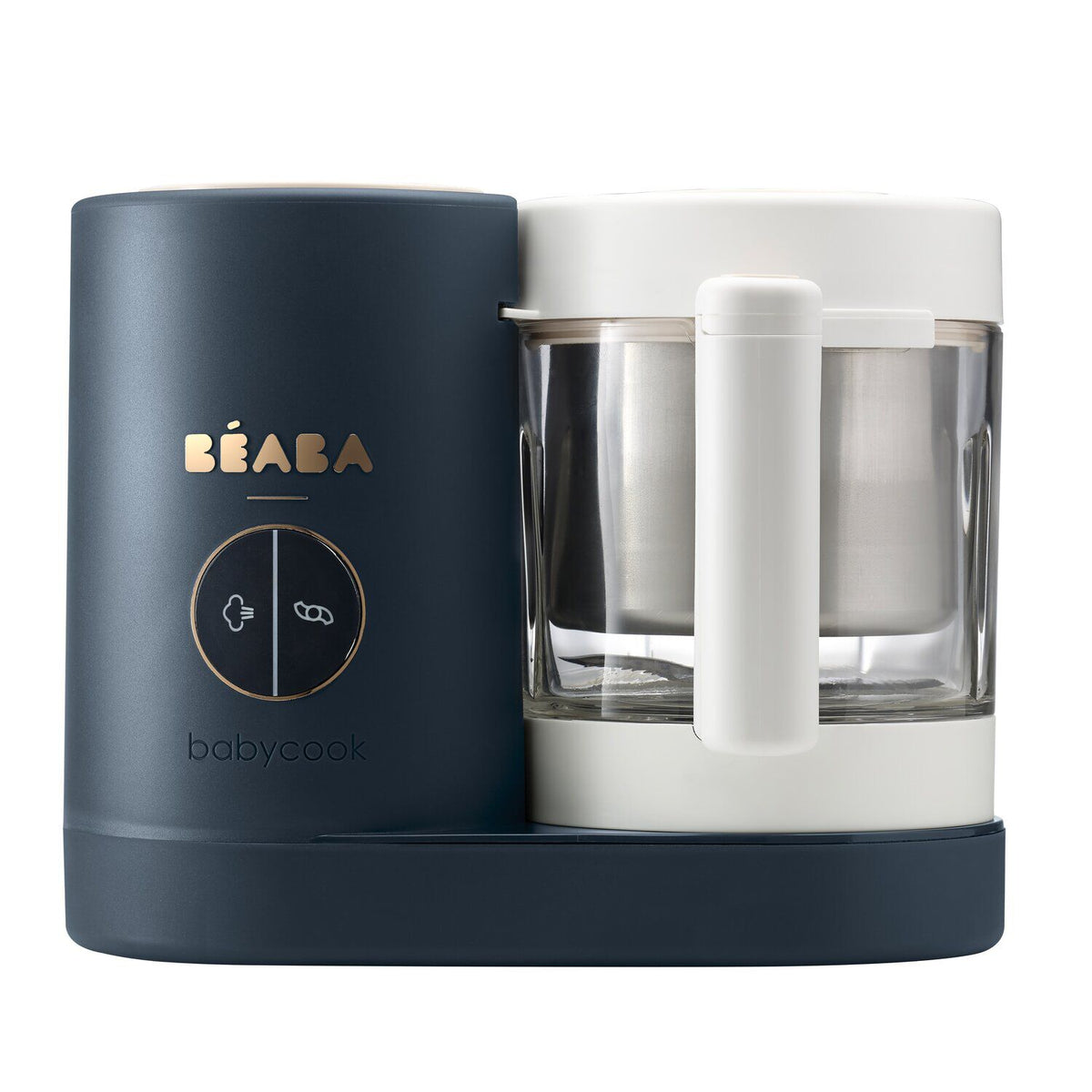
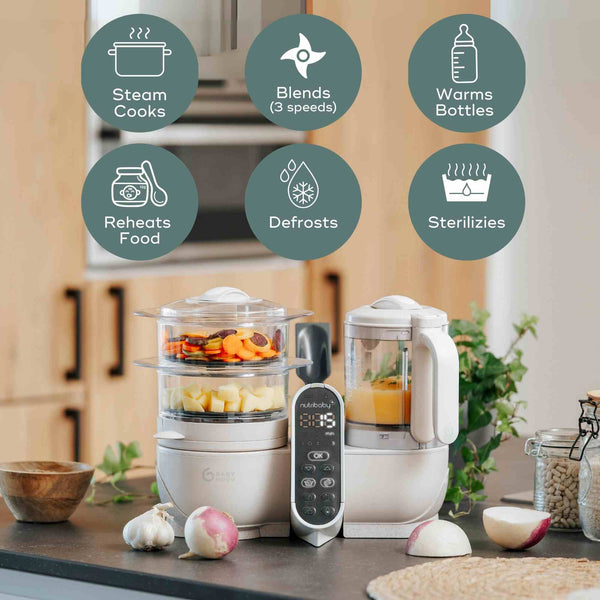
If you only do one thing from this section, do this: Swap two commercial pouches per week for a home-blended puree using organic sweet potato, peas, or zucchini. That's a realistic start.
Does Safe Cookware and Storage Actually Matter for Heavy Metal Exposure?
It does. Aluminum cookware and plastic containers can contribute additional contaminant exposure on top of whatever is already in the food itself. Aluminum cookware can leach into food, especially with acidic ingredients. Plastic containers can leach additional compounds into food during storage or reheating. When making baby food at home, choosing stainless steel or glass at every step removes one more variable from the equation.
Heritage Steel makes 316Ti stainless steel cookware that's non-reactive and manufactured in the USA, a solid choice for the pot you're steaming in. For storage, Ziruma Glass Food Storage Containers use borosilicate glass with platinum silicone lids and no plastic at all. Oxo also makes Smart Seal borosilicate glass containers with leakproof lids that go from freezer to oven.
For serving, the Ahimsa Stainless Steel Dinnerware Set replaces plastic plates and utensils with pediatrician-developed stainless steel options.
If you only do one thing from this section, do this: Move baby food storage out of plastic and into glass or stainless steel before your next batch of home-made puree.
Does Varying Your Baby's Diet Really Help With Heavy Metal Exposure?
Yes. Rotating foods is one of the most evidence-backed practical steps available to parents right now. Since different crops absorb different metals at different rates, dietary variety means no single source dominates your baby's intake. Limiting rice-based cereals and rice puffs specifically is one of the most well-supported individual steps, given the documented concentration of inorganic arsenic in rice. FDA Swapping rice cereal for oat, barley, or multigrain alternatives directly reduces arsenic load without requiring you to overhaul your baby's entire diet.
Start here this week: If rice cereal or rice puffs are a daily staple, replace them with an oat- or barley-based option this week. One swap, meaningful reduction.
Good Brands to Buy
- Beaba Babycook Neo Baby Food Maker — steams and blends in one compact unit; designed specifically for fresh baby food preparation
- Babymoov Duo Meal Station — French brand; steam-and-blend system that helps preserve nutrients
- Ziruma Glass Storage Containers — borosilicate glass with platinum silicone lids; fully plastic-free
- Oxo Smart Seal Glass Containers — leakproof, freezer-to-oven safe; widely available and budget-accessible
- Heritage Steel Cookware Sets — 316Ti stainless steel, non-reactive, made in the USA
- Ahimsa Stainless Steel Dinnerware Set — pediatrician-founded; replaces plastic plates and spoons with safe stainless steel
FAQ
Q: Is organic baby food safer for heavy metals?
Organic certification addresses pesticide use. It says nothing about heavy metal content. Because arsenic, lead, cadmium, and mercury enter plants through soil absorption, organic produce can still contain these metals at significant levels. A 2019 investigation by the House Subcommittee on Economic and Consumer Policy found toxic heavy metals in both conventional and organic baby food products, and the FDA's own action levels for inorganic arsenic apply equally regardless of whether a product carries an organic label. Organic is worth choosing for other reasons, but it doesn't reliably reduce heavy metal exposure on its own.
Q: How do I check heavy metal levels in baby food?
Start on the brand's website and look for a "transparency," "safety," or "testing" page. Some brands voluntarily publish third-party test results there. In Maryland and Virginia, companies are required by law to provide a scannable QR code on packaging that links directly to test results for lead, cadmium, arsenic, and mercury, so scanning that code at the store is the fastest option if you're in those states. For brands not covered by state law, EWG's Food Scores database is a searchable resource. Prioritizing brands that sell in California, Maryland, Virginia, or Illinois can also help, since manufacturers must meet those states' disclosure requirements even if you're purchasing the product elsewhere.
Q: Which baby foods have the highest heavy metal levels?
Rice-based products, including rice cereal and rice puffs, consistently show the highest concentrations of inorganic arsenic across independent testing. FDA Root vegetables such as sweet potatoes and carrots can carry elevated cadmium and lead due to soil absorption, and fruit juices (especially apple and grape) have tested high for both arsenic and lead in multiple independent studies. Rotating away from any single food category and limiting daily rice intake are the two most actionable steps based on what current testing data shows.
About the Author
Jenn Smith, RN BSN, is a registered nurse, mom, and co-founder of Scrunchy Living. She writes evidence-based guides to non-toxic living, pregnancy-safe products, and clean home practices for modern families.
This article is for educational purposes only and does not constitute medical advice. Always consult your child's pediatrician or a qualified healthcare provider before making changes to your baby's diet or feeding practices.
Shop These Recommendations
| Product | Why It's Worth It | Amazon |
|---|---|---|
| Babymoov | A French baby brand known for its "Duo Meal Station" which steams and blends food to… | |
| Beaba | The creator of the "Babycook," a steam cooker and blender designed to make preparing… | |
| Ziruma | A brand focused on plastic-free food storage. Their containers are made of borosilicate… | |
| Oxo | Offers "Smart Seal" glass food storage containers. Known for their leakproof lids and… | Buy on Amazon |
| Ahimsa | A pediatrician-founded brand offering colorful, non-toxic stainless steel dinnerware for… | |
| Heritage Steel | A family-owned manufacturer of titanium-strengthened 316Ti stainless steel cookware. Made… |
From Scrunchy Living: ScrunchyAI is our AI-powered guide to non-toxic living — scan ingredient labels, compare products, and get personalized answers for your home and family. Start your free 14-day trial →
You Might Also Like
- Heavy Metals in Baby Food: What to Buy Instead (2026)
- Arsenic in Rice: What's Safe for Babies & Toddlers
- Scrunchy All-Purpose Wipes — Non-toxic, baby-safe wipes for every surface in your home — the product we reach for every single day.