


Endocrine Disruptors in Cleaning Products: Pregnant Mom's Guide
Key Takeaways
- Fragrance is the #1 offender. The word "fragrance" on a cleaning product label can legally hide dozens of undisclosed chemicals — including phthalates, which are endocrine disruptors (chemicals that interfere with your hormones) linked to reproductive harm during pregnancy.
- Your hormones are running the show right now. During pregnancy, hormones like estrogen, progesterone, and thyroid hormones are controlling fetal development at every stage — and most conventional cleaning products contain chemicals that can disrupt all three.
- Swapping your cleaning products is one of the most impactful — and affordable — changes you can make. Many of the best non-toxic alternatives cost the same as or less than conventional brands, especially when you use concentrates.
Why Does This Feel So Overwhelming?
You're already tracking your prenatal vitamins, reading every food label, and trying to get enough sleep. The last thing you want is someone telling you that the spray you've used to clean your counters for years might be harming your baby.
That's not the goal here.
The goal is to give you clear, practical information so you can make one or two swaps this week — and feel genuinely good about it. You don't have to throw everything out at once. Progress over perfection, always.
What Is an Endocrine Disruptor, and Why Should Pregnant Women Care?
An endocrine disruptor is a chemical that can interfere with your body's hormonal system — the endocrine system — which regulates estrogen, testosterone, thyroid hormones, progesterone, and more. During pregnancy, that system is doing some of its most critical work: driving fetal organ development, regulating the placenta, and supporting healthy implantation and growth.
Most conventional home cleaning products contain chemicals that can disrupt thyroid hormones, testosterone, progesterone, and estrogen — all of which have direct impacts on fetal development. Research published via the NIH has raised consistent concerns about prenatal exposure to these chemicals.
The endocrine system is especially vulnerable during pregnancy because the fetus has no developed detox pathways yet. What you absorb, baby absorbs.
SCRUNCHY MOM TIP: You hear "endocrine disruptor" thrown around a lot in the clean living world — but what does it actually mean? Think of your endocrine system as the body's messaging service. Endocrine-disrupting chemicals (EDCs) act like fake messages — they can mimic, block, or interfere with your hormones in ways your body can't always detect or correct. During pregnancy, those fake messages can reach your baby too.
Which Chemicals in Cleaning Products Are the Biggest Concern?
Synthetic Fragrance and Phthalates
The word "fragrance" (or "parfum") on an ingredient label is a legally protected trade secret — meaning manufacturers can use it to hide a cocktail of chemicals, including phthalates (pronounced THAL-ates). Phthalates are endocrine disruptors that have been shown to cross the placental barrier and interfere with hormonal function. Research has linked prenatal phthalate exposure to reproductive issues in male children and impaired motor development.
Diethyl phthalate (DEP), one of the most common phthalates found in cleaning product fragrances, is specifically associated with interference with testosterone — which matters even if you're carrying a girl, because testosterone plays a role in brain development for all fetuses.
If you only do one thing from this section, do this: Stop buying cleaning products with "fragrance" or "parfum" on the label. Full stop.
Glycol Ethers
Glycol ethers are solvents found in oven cleaners, multi-surface sprays, and glass cleaners. They are associated with miscarriage, decreased male fertility, and birth defects. The CDC lists glycol ethers as reproductive hazards. Look for names like 2-butoxyethanol, EGPE, or EGME on ingredient lists — and skip any product that doesn't disclose its full ingredient list.
Triclosan and Quaternary Ammonium Compounds (Quats)
Triclosan and quaternary ammonium compounds (quats) are antibacterial agents found in many "antibacterial" cleaning products and disinfecting wipes. Both have been flagged by the EWG (Environmental Working Group) as endocrine-disrupting chemicals, with quats specifically associated with reduced fertility in animal studies. Most "disinfecting wipes" on drugstore shelves contain quats.
Diethanolamine (DEA)
DEA (diethanolamine) is a foaming and emulsifying agent found in some spray cleaners and multipurpose products. It may appear as Oleamide DEA, Cocamide DEA, or Lauramide DEA on ingredient lists. It's been flagged for potential hormone disruption and is listed by the EWG as a moderate concern.
What Should I Actually Use Instead?
This is the part that actually helps. Here's a realistic good/better/best framework.
Good (Budget Swap)
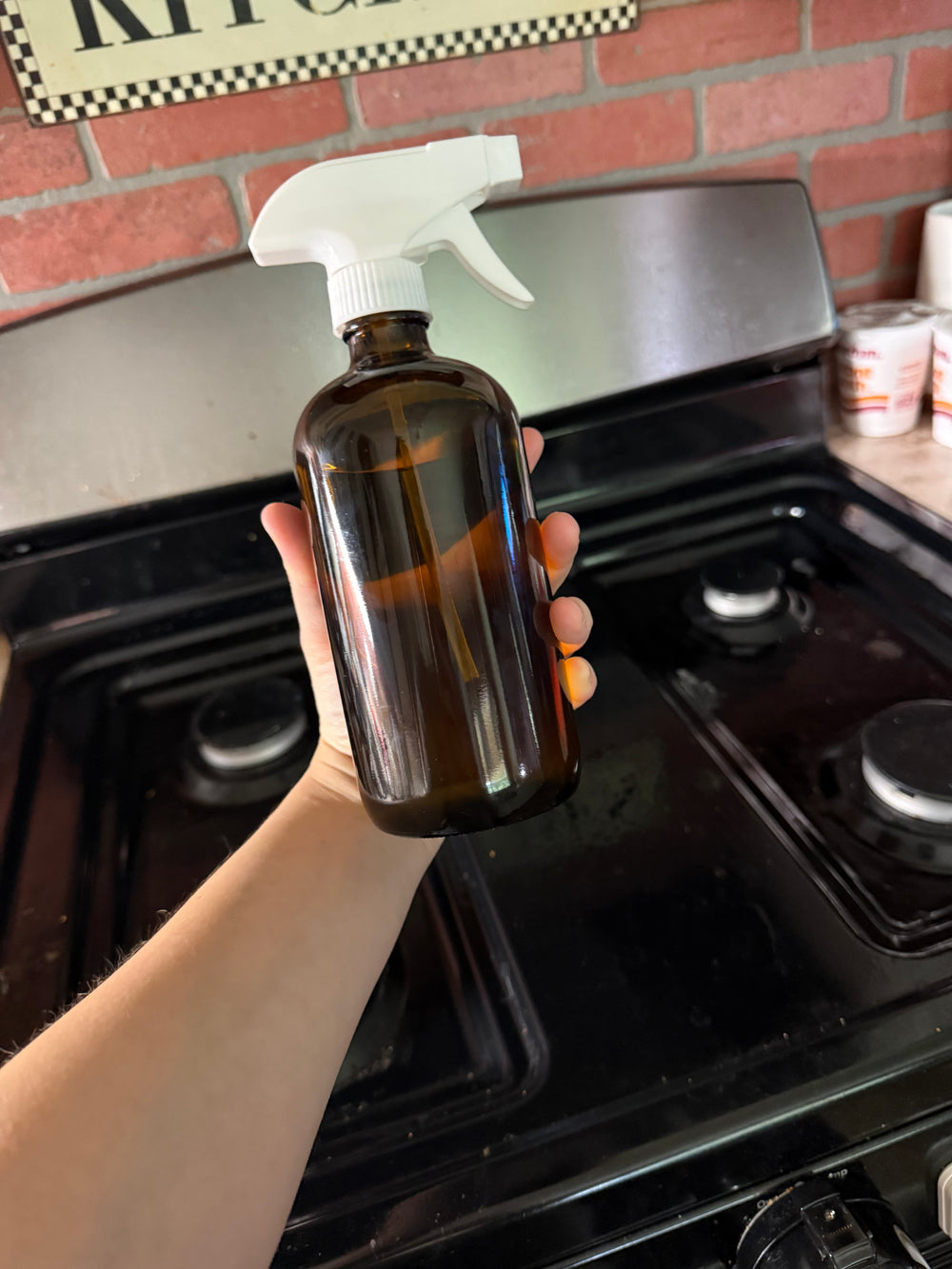
White vinegar + water + a few drops of tea tree oil in a spray bottle. Effective for most household surfaces, costs almost nothing, and has zero endocrine-disrupting chemicals. It's not the best smelling option, but it works.
If you're on a tight budget, start with a DIY vinegar spray and don't stress yet about the premium options.
Better (Ready-Made, Mid-Range)
For an affordable, clean ready-made option, Scrunchy All-Purpose Wipes are a genuinely useful product to keep on hand — especially when you're pregnant and want a quick, safe wipe-down of counters, high chairs, restaurant trays, or airplane seats.

They're quats-free, fragrance-free, and rinse surfaces thoroughly before food or skin contact — which checks every box for pregnancy-safe cleaning. They're individually wrapped, making them practical for moms who are always on the go.
For a kitchen spray, Holy Naturals Multi-Purpose Cleaning Spray keeps the ingredient list simple and avoids the endocrine-disrupting fragrances and preservatives that show up in most conventional sprays.
Best (Whole-Home Clean Swap)
Branch Basics makes a plant-and-mineral concentrate that replaces virtually every cleaner in your home — all-purpose, bathroom, laundry, and more — from a single bottle you dilute with water. It's certified non-toxic, fragrance-free, and one of the most cost-effective systems once you've made the initial kit investment.
If that's not realistic right now, here's a scrunchy middle ground: Start with replacing just your counter spray and your cleaning wipes. Those are the products with the most frequent skin and surface contact.
How Do I Actually Make the Transition Without Losing My Mind?
You don't have to replace everything at once. Here's a realistic approach:
Week 1: Finish what you have, but don't replace like with like. When a conventional cleaner runs out, replace it with a clean alternative.
Month 1 priority: Fragrance is usually the most significant and consistent chemical concern in the home. Switching to fragrance-free cleaners first gives you the most impact for the least effort.
As budget allows: Consider a concentrate system like Branch Basics so you're not buying multiple products — one concentrate, multiple bottles, one clean ingredient list.
For zero-waste families, Fillgood Castile Soap is a refillable castile soap option that works as a base for DIY floor cleaner, dish soap, and general cleaning — minimal packaging, minimal ingredients, minimal cost per use.
SCRUNCHY MOM TIP: Don't fall for greenwashing. Labels like "natural," "green," or "plant-based" are not regulated — they mean nothing legally. Always flip to the ingredient list. If a product doesn't disclose its full ingredient list (including what's in its fragrance), that's a red flag.
Good Brands to Buy
- Scrunchy All-Purpose Wipes — Quats-free, rinse surfaces thoroughly before food or skin contact, individually wrapped; ideal for on-the-go pregnancy and postpartum use.
- Holy Naturals Multi-Purpose Cleaning Spray — Simple ingredient list, no endocrine-disrupting fragrances or preservatives.
- Branch Basics — Best whole-home clean swap; one concentrate replaces all your cleaners.
- Fillgood Castile Soap — Refillable, zero-waste, multi-use; best budget-friendly base for DIY cleaning.
- Attitude Household Cleaners — EWG Verified, hypoallergenic, and widely available; a solid pick for families transitioning to cleaner products.
FAQ
Q: Is it safe to clean my home at all while pregnant?
Yes — and you should. The goal isn't to stop cleaning; it's to swap out the products that contain endocrine-disrupting chemicals. Prioritize ventilation (open windows when cleaning), avoid spray products that create fine mist you can inhale, and choose fragrance-free, quats-free alternatives. ACOG recommends minimizing exposure to toxic chemicals during pregnancy while continuing normal household hygiene.
Q: How do I know if a cleaning product contains phthalates if they're hidden in "fragrance"?
The honest answer: you often can't tell from the label alone. The safest approach is to avoid any product that lists "fragrance," "parfum," or "scent" without disclosing what that fragrance contains. Use the EWG's Guide to Healthy Cleaning to check specific products — they rate thousands of cleaners based on ingredient transparency and toxicity.
Q: Do these chemicals affect the baby even in small amounts?
Research suggests that for endocrine disruptors specifically, even low-level exposure may be significant — particularly during sensitive windows of fetal development. A 2024 peer-reviewed study published in Archives of Gynecology and Obstetrics tracked maternal exposure to specific endocrine-disrupting chemicals and found associations with preterm birth, reduced birth weight, and altered gestational age at delivery — effects that were observed even at exposure levels considered "low" by conventional standards. The mechanism is straightforward: the developing fetus lacks the liver detox capacity of an adult, so endocrine-disrupting chemicals that cross the placenta are metabolized far more slowly and have a disproportionate impact relative to the dose. This is why organizations like ACOG advise that there is no known safe level of exposure to certain classes of EDCs during pregnancy, and why swapping high-contact products — your counter spray, your cleaning wipes — is the most practical first step.
Shop These Recommendations
| Product | Why It's Worth It | Amazon |
|---|---|---|
| Scrunchy All-Purpose Wipes | Non-toxic, quats-free all-purpose wipes by Scrunchy Living — safe for household surfaces (rinse before food contact), rinse after use… | |
| Holy Naturals | Natural cleaning products focusing on simple ingredients without endocrine-disrupting… | |
| Attitude | A brand committed to clean, eco-conscious products for the whole family. Their skincare… | Buy on Amazon |
| Branch Basics | A brand of non-toxic, concentrate-based cleaning products. Their multi-purpose… | |
| Public Goods | A membership brand for sustainable, minimalist home and personal care products. Their… | |
| Fillgood | A zero-waste retailer offering bulk refillable home and body products, including… | |
| Branch Basics | A non-toxic cleaning system based on a plant-and-mineral concentrate. Replaces multiple… | Buy on Amazon |
You Might Also Like
- Are Your Disinfectant Wipes Harming Your Health?
- 5 Hidden Chemical Danger Zones in Your Home
- Scrunchy All-Purpose Wipes — Non-toxic, baby-safe wipes for every surface in your home — the product we reach for every single day.
Medical Disclaimer: The information in this article is intended for educational purposes only and does not constitute medical advice. Always consult your OB-GYN, midwife, or a qualified healthcare provider before making changes to your health routine during pregnancy or postpartum.